Indigenous Enterprises Foundation · Chile and Latin America
Bridges between Indigenous peoplesand responsible companies
To contribute to Indigenous economic autonomy and to the country's sustainable development.
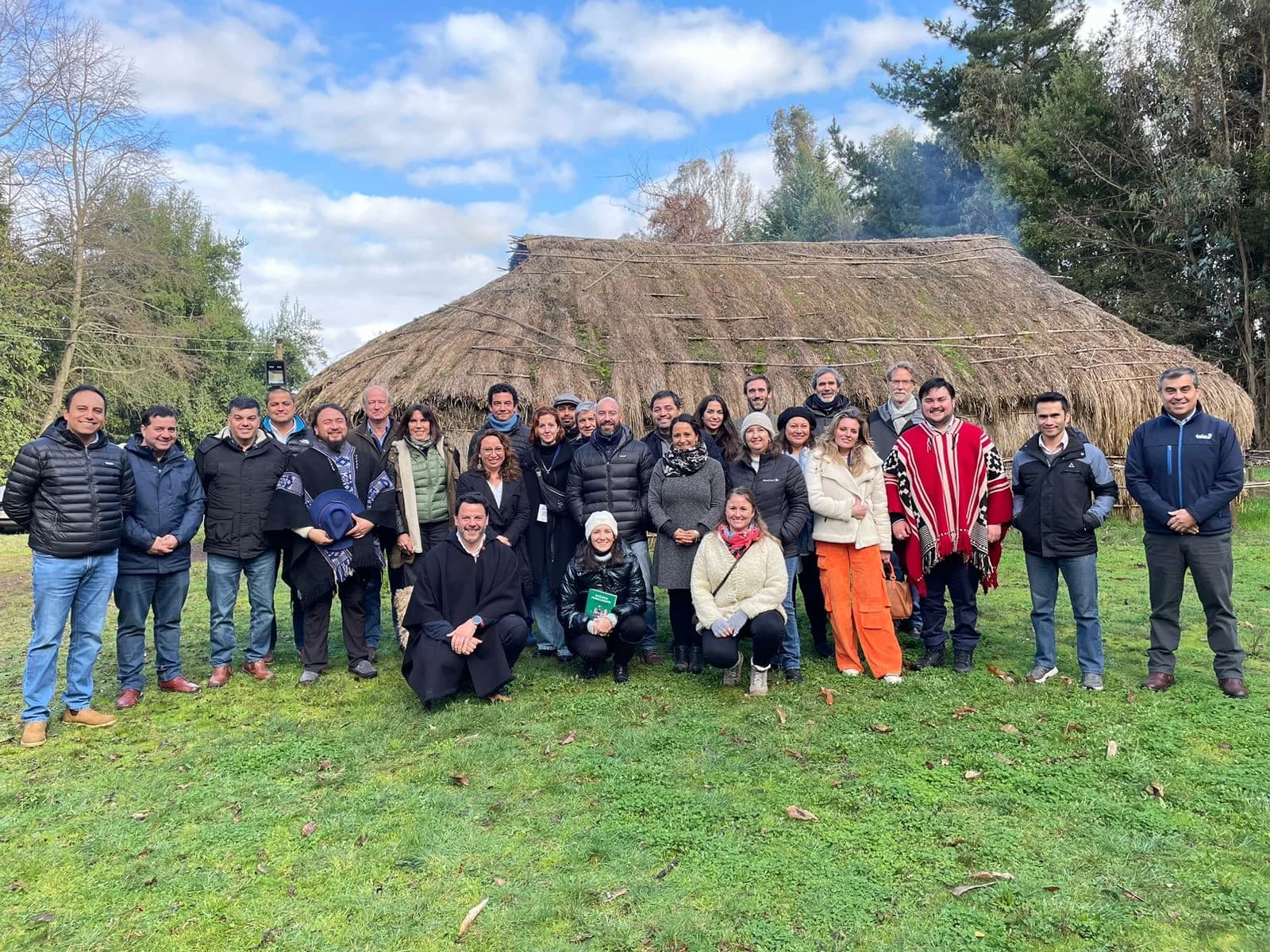
AMCHAM delegation on the ground, with Indigenous communities and businesses
How we do it
Our model is three rings and an axis. This is how the Indigenous Census, the Directory, the Seal and Procurement fit in.
Indigenous peoples · their businesses already exist
Two independent doors
Moving between levels is neither a prior requirement nor a condition: so states the Regulation
The commitment axis In design
↑ Back to Indigenous peoples
Respect
Appropriating no one’s cultural heritage. Sworn declaration against INAPI’s trademark guidelines.
Contribute
Giving back in at least one of four dimensions: environmental, social-territorial, cultural-spiritual, economic.
Good practices · voluntary · at both levels
The system is governed by the SEi Use and Control Regulation, filed with INAPI.
01
The national census of the
Indigenous economy of Chile
The first national diagnosis of the Indigenous entrepreneurial ecosystem of Chile, now in its second edition.
Indigenous economic initiatives surveyed
97% of the initiatives recorded by social development programmes operate informally.
2nd National Survey · Chile 2025 · It shows who social development reaches today, and where the gap to close is.
See the census →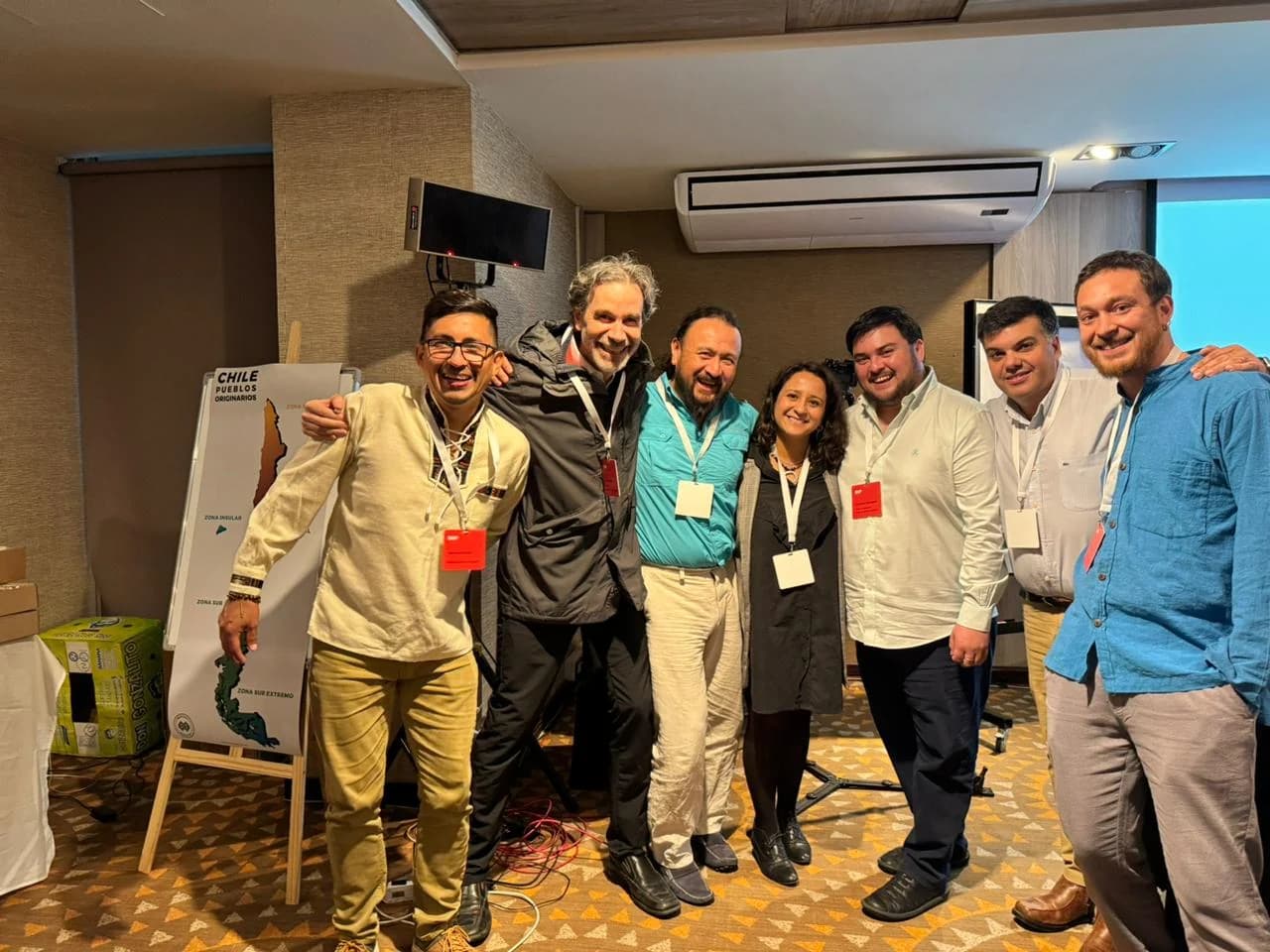
Workshop in the territory · formalization is supported where the business is
02
Chile does not lack an ecosystem:
the Indigenous one has no front door
Chile already has a business support ecosystem, built and funded: incubators, accelerators, mentor networks and coworking spaces, with years of operation and public money behind them. What it does not yet have is a door through which Indigenous peoples’ companies can enter.
There is no need to build a parallel ecosystem. What is needed is for the existing one to be able to recognise the 17,221 economic initiatives the Census identified. And to recognise them they have to be identifiable and verifiable: that is what was missing.
Indigenous population, registered Indigenous businesses and contribution to gross domestic product in five countries, ordered by share of Indigenous population.
| Country | Indigenous population | Registered Indigenous businesses | Share of national GDP |
|---|---|---|---|
| New Zealand | 22.3% | 21,700 | 5.6% |
| Chile | 12.8% | no data | no data |
| Canada | 4.9% | 62,250 | 0.8% |
| Australia | 3.1% | 11,900 | 0.4% |
| United States | 1.7% | 272,919 | not comparable |
The difference is not in the peoples: it is that in those countries someone has been keeping count for decades. A figure no one gathers is a market no one finances, no one buys from and no one certifies.
Inventory of support organizations: Directory of Entrepreneurial Ecosystem Support Organizations, CORFO, 2018. Initiatives identified: 2nd National Census of the Indigenous Economy, 2025. Foundation’s own compilation based on Zulueta, Javier (2020), “Enfoque de promoción integral de negocios indígenas”, IDB. The years do not match across countries and are stated. Population: censuses of New Zealand 2013, Canada 2016, Australia 2016 and the United States 2010; Chile, INE, 2017 Census. Businesses and GDP share: Te Puni Kōkiri 2015, TD Report 2011, PwC 2018 and Survey of Business Owners 2017. The United States does not publish its GDP share in a comparable unit.
03
We are not inventing the model
What Chile lacks has been running for decades elsewhere.
Four precedents
- An Indigenous bank of their ownCanada, 1996
The First Nations Bank of Canada received its banking charter in November 1996: a national bank with more than 80% of ownership and control in Indigenous shareholders. Peace Hills Trust, of the Samson Cree Nation, had been operating since 1980.
- A public procurement targetAustralia, 2015
The Indigenous Procurement Policy sets aside contracts and fixes targets: 3% of the number and 3% of the value in 2025-26, rising to 4% by 2029-30. Canada requires a minimum of 5% of value. It is procurement policy, not legislation.
- Business certificationAustralia, 2009
Supply Nation certifies Indigenous businesses, and more than 870 corporate, public sector and not-for-profit buyers purchase against that registry.
- Dedicated financingCanada
NACCA’s network of more than 50 Indigenous financial institutions lends taking on more risk than commercial banks, with annual losses of 2.1% in the 2019-20 financial year.
Chile is not the first country to raise this: the standard was built by comparison, and it gives back.
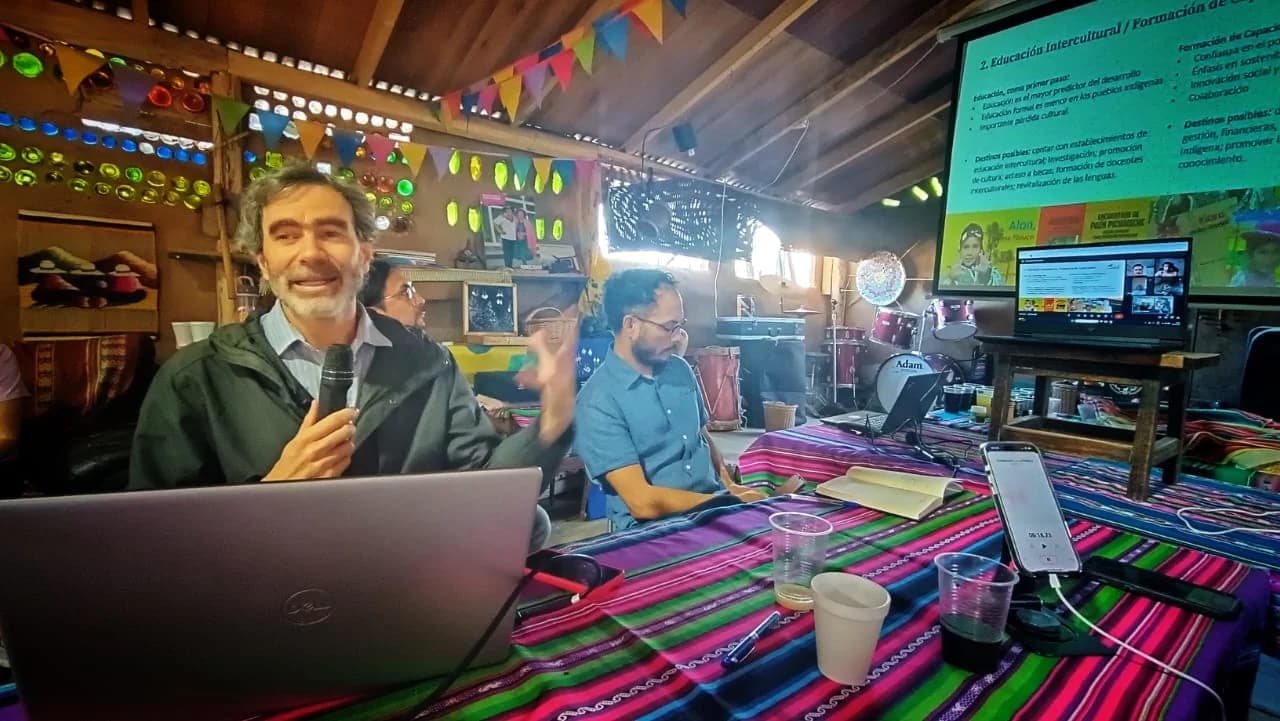
Workshop with communities · intercultural education
The ecosystem Indigenous
peoples deserve
“To build bridges between Indigenous peoples and responsible companies in Chile and Latin America to contribute to Indigenous economic autonomy, promoting inclusion, sustainability and reconciliation.”
Founded in 2020 · Chile
Learn more about the FoundationBorn in Temuco,
working across all of Chile
We were born in La Araucanía and we work across Chile, from Arica to Magallanes. The mission also looks to Latin America.
Headquarters
Av. Caupolicán N° 110, Temuco, La Araucanía
contacto@empresasindigenas.org
Does your company operate on Indigenous territory?
Community relations are a material risk. Buying from verified Indigenous businesses of the territory is the most direct, auditable way to manage it, with reporting aligned to IFC PS7, ICMM and GRI 204.
Write to the FoundationWhat the Foundation offers its corporate partners