Indigenous Census
- What it does
- Sizes the Indigenous economy from public sources and shows whom to invite.
- What it does not do
- It enrolls no one and decides nothing in the system: no business declared its Indigenous status there.
What is missing is the means to know them, accredit them and connect them. That is what the three rings of the system are for, with an axis that returns to the peoples.
The three rings read from the edge to the centre, and all their flows point inward. The axis is the only thing that returns to the peoples.
Ring 0 · Know
from secondary sources
Ring 1 · Accredit
consent + verification by the Foundation
Two independent doors
Moving between levels is neither a prior requirement nor a condition: so states the Regulation
Registered makes you findable; Certified makes you claimable.
Ring 2 · Connect
services, not certification
Is your business not formalised yet?
The formalisation guide is interactive and for orientation: it helps choose a legal structure and prepare the tax registration.
Go to the guide↑ Back to Indigenous peoples
The three rings point to the centre. The two good practices run the other way: they are the only movement that goes from the business back to the peoples.
Cultural safeguards declaration: the business declares that its brands and signs do not appropriate anyone's cultural heritage, measured against an external standard, INAPI's trademark guidelines.
Declaration of Commitment to Indigenous Peoples: a documented, verifiable commitment in at least one of four dimensions (environmental, social-territorial, cultural-spiritual or economic), proportional to each business's reality.
Both are voluntary, and the reason is legal: Law 19.039 requires the Seal to be authorised for every business that meets the Regulation, so no condition may be demanded that a reasoned decision cannot measure. In design.
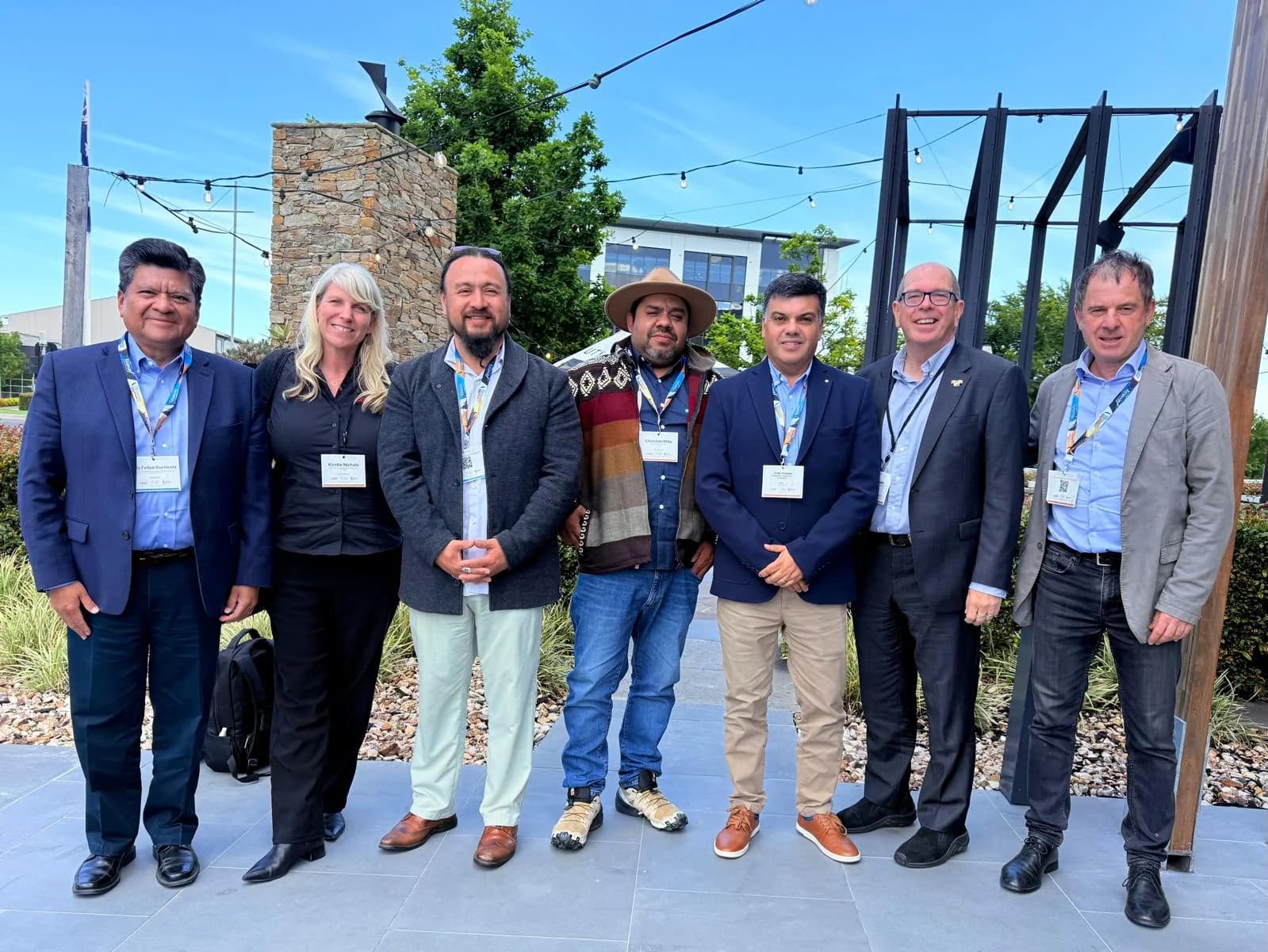
The First Nations Bank of Canada received its banking charter in November 1996; today, more than 80% of its ownership and control is in Indigenous hands.
The Indigenous Procurement Policy sets aside contracts and fixes targets: 3% of the number and 3% of the value in 2025-26, rising to 4% by 2029-30.
Supply Nation certifies Indigenous businesses, and more than 870 corporate, public sector and not-for-profit buyers purchase against that registry.
NACCA’s network of more than 50 Indigenous financial institutions lends with annual losses of 2.1% (2019-20 financial year), taking on more risk than commercial banks.
Chile is not the first country to raise this: the standard was built by comparison, and it gives back.
“In the Mapuche language the word for 'poor' didn't exist. Poverty was something the Mapuche People did not know and that we must leave behind.”
“Indigenous peoples are not vulnerable. We lack opportunity, we lack possibility, we lack being seen with the right eyes.”
“Indigenous Peoples have participated in international trade for millennia. In modern economies, Indigenous companies have shown remarkable resilience with enormous growth potential.”
Businesses that declare themselves enter the Directory, and the Foundation verifies them; those that also prove management, control and track record apply to the Seal.