A bridge for Indigenous businesses in Chile and Brazil: the Foundation and Integrare explore how to work together
Brazil is Chile’s third-largest trading partner and the top Latin American destination for its exports. To explore how Indigenous businesses in both countries can take part in that exchange, the Foundation met with Integrare, in a meeting facilitated by Mayank Shah, Director of the GSDA.
By FEi Team
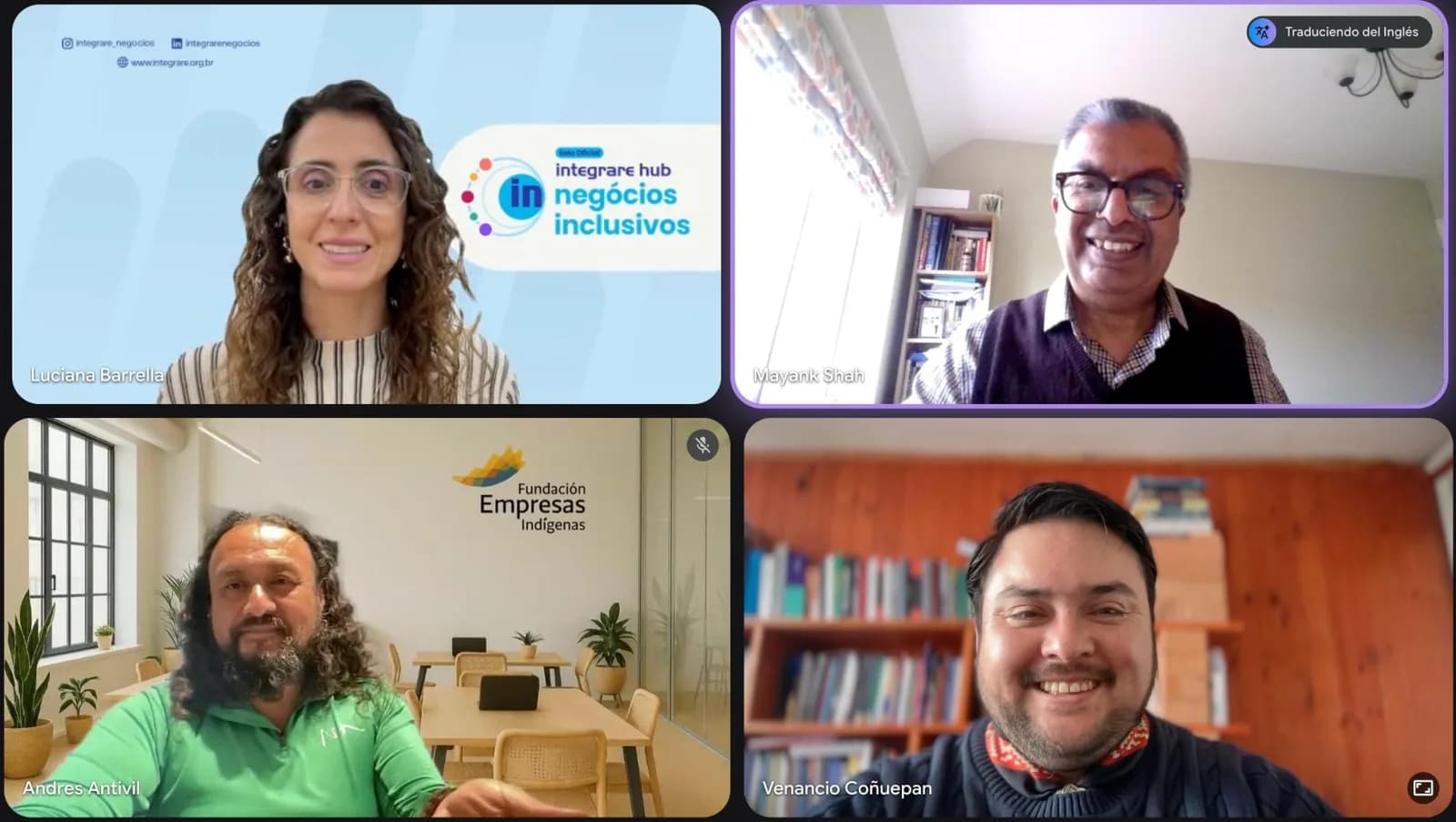
Brazil is Chile’s third-largest trading partner and the top Latin American destination for its exports. To explore how Indigenous businesses in both countries can take part in that exchange, the Indigenous Enterprises Foundation met on Friday, October 23, 2026 with Integrare, a Brazilian non-profit organisation that connects certified suppliers, Indigenous businesses among them, with large corporate buyers.
Integrare was represented by Luciana Barrella, Head of Member Company Relations, who now leads the organisation’s operations in Brazil. The Foundation was represented by its President, Andrés Antivil Álvarez, and its Executive Director, Venancio Coñuepan Mesías. The meeting was facilitated by Mayank Shah, Director of the Global Supplier Diversity Alliance (GSDA), who brought the two organisations together.
Integrare has been working since 1999 and is qualified in Brazil as a civil society organisation of public interest (OSCIP). It connects large companies with suppliers it certifies under its own seal, and the groups it works with include Indigenous businesses. It is also the GSDA’s partner in Brazil.
What was discussed
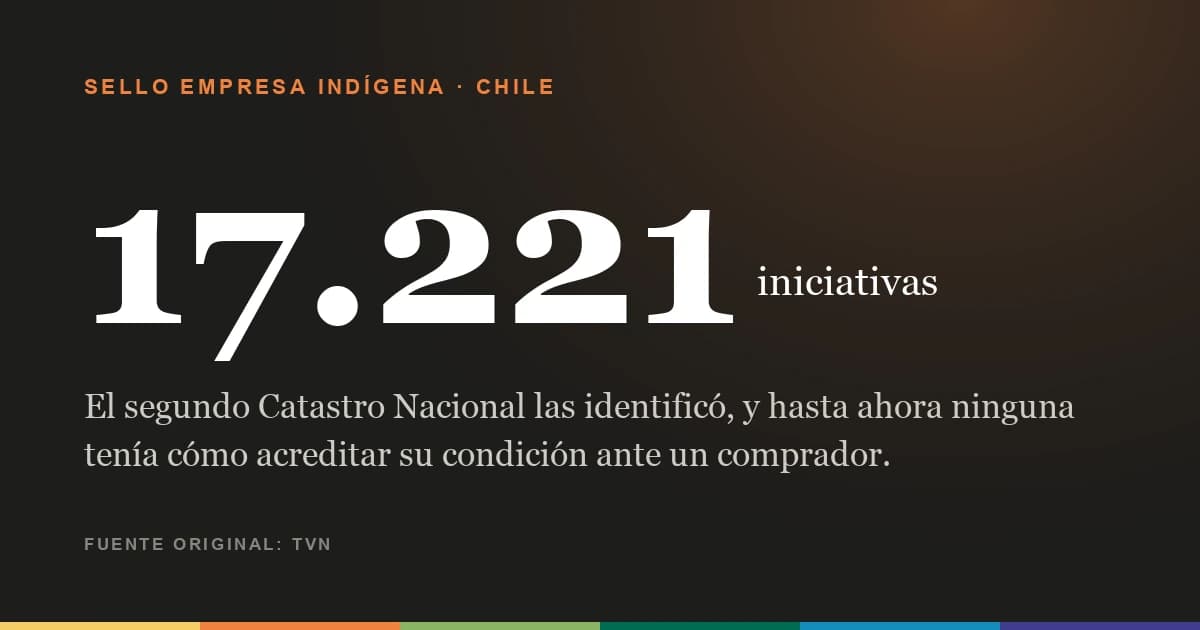
Mayank Shah set out the purpose of the meeting: for two organisations working in the same field and in the same region to get to know each other, share what they know and avoid duplicating efforts by working in silos. The Foundation shared the path travelled in Chile —the Census of Indigenous economic initiatives, the Directory and the Indigenous Enterprise Seal, whose application for registration is under review by INAPI— and explained why verification matters: in Canada and Australia, experience has shown that without certification, businesses appear that use Indigenous identity without any real connection to the peoples.
Andrés Antivil also set out the vision the Foundation brings to these conversations: that the Indigenous business model should incorporate the knowledge systems of the peoples, and not only the economic, social and environmental dimensions of sustainability. Three lines of work came out of the meeting:
- Aligning how Indigenous status is accredited in each country, which is the first step before comparing certifications.
- Understanding in detail how each organisation certifies, with the idea, raised by Integrare and by the GSDA, of moving towards a common standard for recognising Indigenous businesses in Latin America.
- Joint research: building a baseline of Indigenous businesses in Brazil from public sources, as was done with the Census in Chile, and identifying the buying companies that have human rights policies and policies on their relationship with Indigenous peoples.
Why Brazil
The figures explain the interest. In 2025, Brazil was Chile’s third-largest trading partner, with goods trade of US$12,654 million, 6.3% of the total, behind only China and the United States. It was also the top Latin American destination for Chilean exports, at US$4,894 million, and the fifth worldwide. More than half of those sales, US$2,699 million, were non-traditional goods, that is, outside copper and the other traditional exports.
The framework for that trade already exists. In addition to the agreement with Mercosur, a free trade agreement between Chile and Brazil has been in force since 2022; it includes a chapter on regional and global value chains and makes it easier for smaller businesses to access Brazilian public procurement. And large buyers already operate on both sides: a single parent company can buy from an Indigenous supplier in Chile and from another in Brazil.
The question is how Indigenous businesses enter that exchange. In the Foundation’s conversations with them, the cost of export transport comes up as one of the main barriers. That is why the work with Integrare begins with understanding the Indigenous supply in each country and the responsible buyers operating in both, rather than with exporting.
A word of thanks
The Foundation thanks Mayank Shah, Director of the GSDA, for making this meeting possible. The GSDA is the international alliance that brings together organisations that certify businesses and connect them with large buyers in Australia, Canada, China, the United Kingdom and South Africa, and which the Indigenous Enterprises Foundation joined this month as an Associate Member, with the signing of the affiliation agreement on October 16, 2026.
The next steps were agreed: a new meeting with the Integrare team, and presenting these ideas to the other GSDA members, to see whether organisations from other countries will join the joint research.
Keep reading
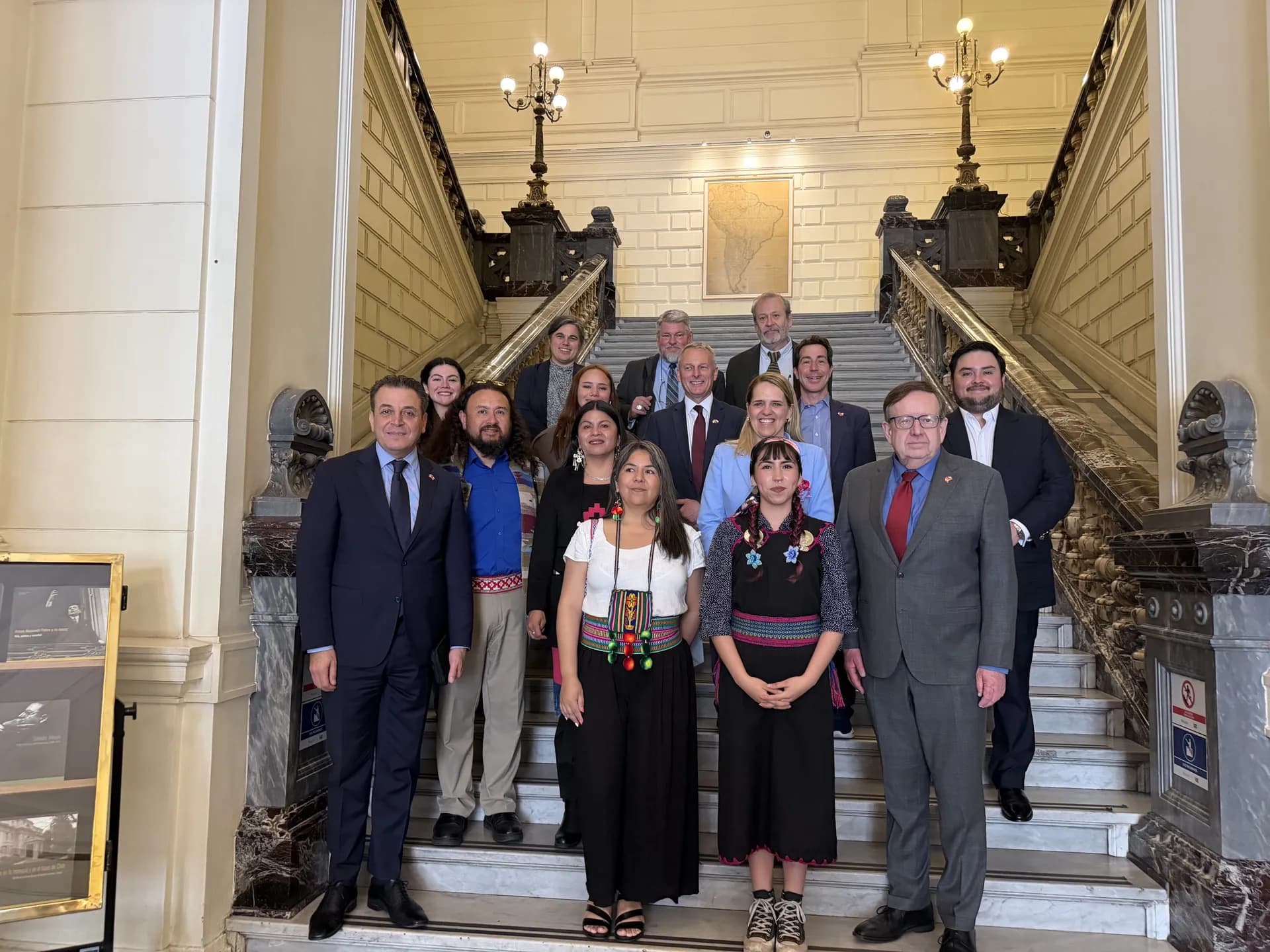
Indigenous leaders hold a dialogue with Canadian parliamentarians on Indigenous-led economic development
A global network for Indigenous certification: the Foundation joins the GSDA as an Associate Member