Nineteen families in the Intag Valley own 90% of the hydropower plant they built
In Imbabura, four communities built a 300-kilowatt run-of-river plant and kept ownership of it. Half of the electricity income goes into a trust for the conservation of the cloud forest.
By FEi Team
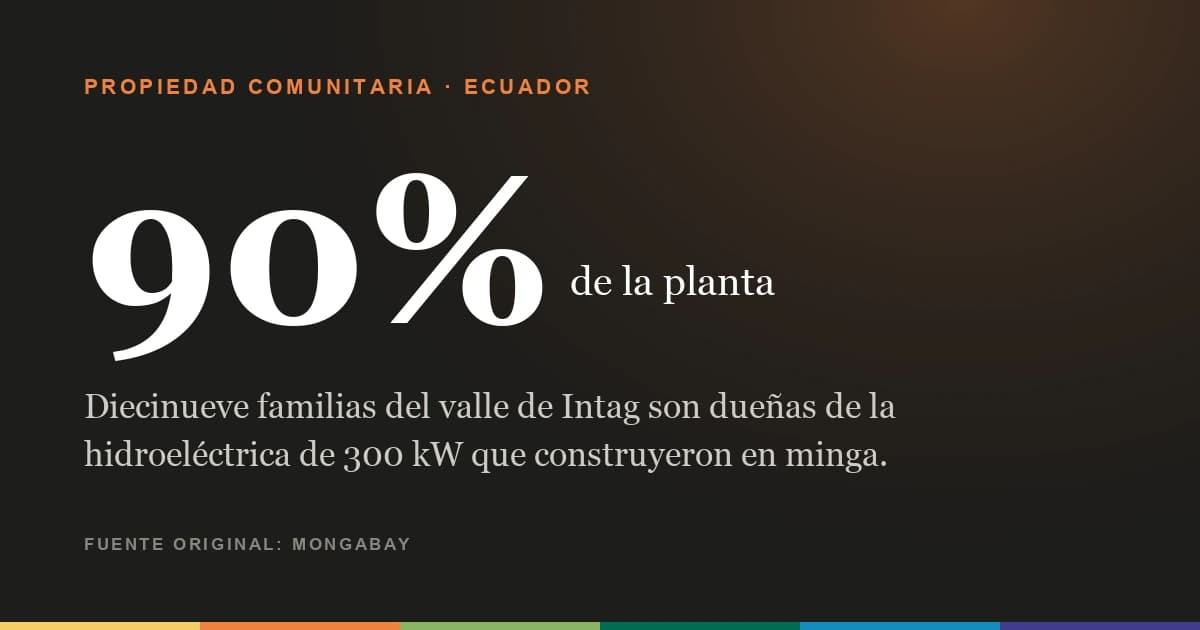
INTAG VALLEY, ECUADOR. Nineteen families from the communities of Cerro Pelado, Chinipamba, Nangulvi Bajo and Barcelona own 90% of HidroAguagrún, a 300-kilowatt run-of-river plant on the Aguagrún River, in the canton of Cotacachi, Imbabura province.
The remaining 10% is split equally between Corporación Toisán and Fundación Futuro, the two organisations that provided technical support and more than half of the funding. The project has been registered as a company since 2022, and half of the net income from electricity sold to the national grid will go into a trust for conservation, starting with the area’s cloud forests.
The plant projects US$120,000 a year from electricity sales, with about US$40,000 in operation and maintenance. According to the document provided by Fundación Futuro, the project has already raised income and capacity in 17 rural businesses, trained 28 leaders and young people in sustainable energy, created 11 permanent jobs in operation, monitoring and ecotourism, and plans for 345 people to share in the profits over the plant’s 30-year lifespan.
The work was carried out through mingas, the Andean system of collective, voluntary labour, and decisions were voted on in community assemblies. Local builders, haulers and mechanics were the first choice for hiring. The intake and an 800-metre buried pipeline are finished, the 60-square-metre powerhouse is still under construction, and the project has entered its hydrostatic testing phase. The families expect to complete construction by the end of 2026. To sell to the national grid, the local network must stop being single-phase, and they are negotiating co-financing for that with the regional electricity company.
Jorge Guachagmira, president of the Río Aguagrún Renewable Energy Production Association, which represents the 19 families of the micro-watershed, summed up the idea in an interview with Mongabay published in English.
The owners, Guachagmira explained, will not be conventional corporations; the aim is for ownership to rest with the people who live there.
What the Foundation reads here
The asset was not compensated for: it was retained. In the Chilean conversation about energy and territory, what is usually offered to a community is compensation, jobs during construction or a percentage of sales. Here 90% of the asset stayed in the families’ hands and the technical partners kept 5% each, even though they put in more than half of the money. That changes two things no compensation changes: who decides, and who builds capital over the thirty years the plant will run.
What is replicable is not the technology. Fundación Futuro identified five more sites in Intag, from 300 kilowatts to 1 megawatt, and is working on financing models to support each community. The conditions its technical staff list are organisational before they are technical: community cohesion and will, water availability, firm partnerships, access to capital, and technical capacity that does not measure only profits. In Chile the equivalent obstacle is almost never the turbine: it is capital and ownership.
The enabling framework matters too, and it is the part that cannot be improvised. Ecuador’s 2008 Constitution and the 2015 Organic Law on the Public Electricity Service allow the Popular and Solidarity Economy to take part in the electricity sector, and the country has been pushing distributed generation since the 2024 crisis, when blackouts reached fourteen hours a day in a system that relies on hydropower for 78% of its electricity. Without that legal door, community ownership of a power plant could not have been registered.
Why this entry does not say “Indigenous families”
The curation through which this story arrived headlined it as a project of Indigenous families. The Mongabay report says so nowhere: it speaks of 19 families from four communities, of local communities, of residents and of mingas, which are an Andean institution of collective work and not an accreditation of identity. The Foundation holds that Indigenous status is not established from the outside, neither by practice nor by place: it is declared by the person concerned or by their organisation. As long as the source does not accredit it, this entry does not attribute it, and the value of the case does not depend on that label. It lies in the ownership structure, which is replicable with or without it.
Keep reading

Communities in Calama and Alto El Loa gain access to 200 training places in entrepreneurship and artificial intelligence
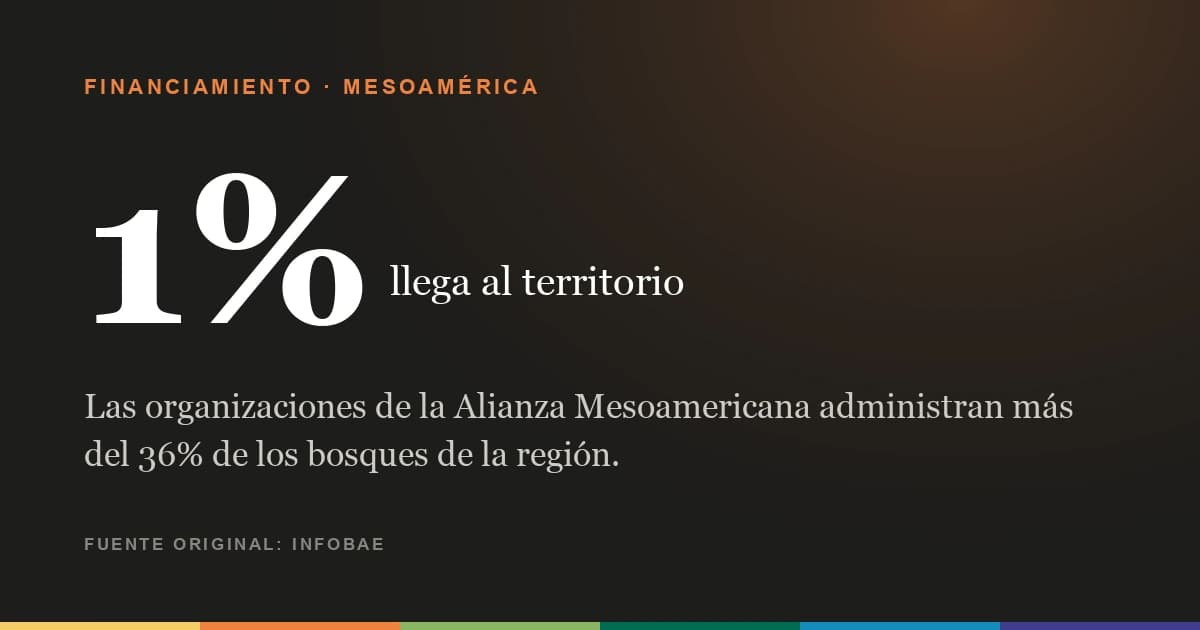
Mesoamerican organisations manage more than 36% of the region’s forests and receive 1% of the funding